WP ADA Compliance Check Plugin

  • | |

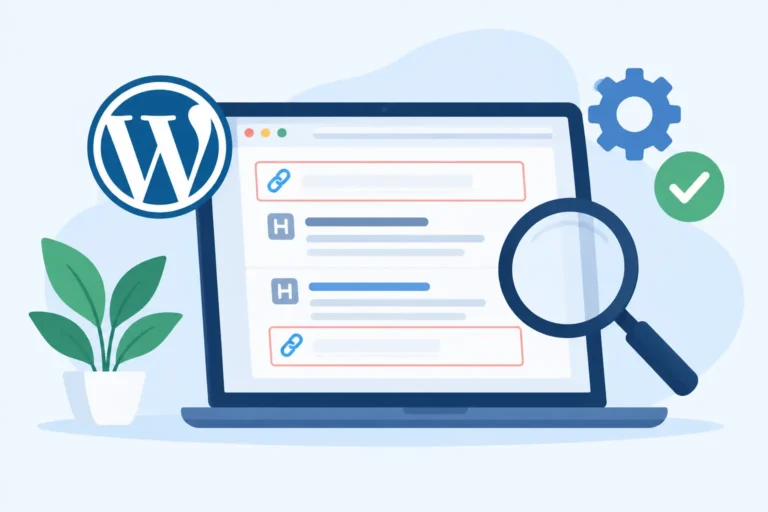
    Web Accessibility Best Practices: Eliminating Empty Heading Tags

    Maintaining a clean and logical heading hierarchy is one of the most critical foundational elements of an accessible website. Structural elements like heading tags (<h1> through <h6>) serve as a roadmap for assistive technologies, allowing users to skim pages efficiently. When a website contains empty heading tags—code strings like <h2></h2> that contain no textual information—it…


  • | |

    Web Accessibility Best Practices: Crafting Compliant Document Links and Mailto Actions

    Ensuring clear communication when users interact with specialized links is a vital aspect of modern web accessibility standards. Links that open external document types like PDF files or trigger native device systems like mailto links often cause unexpected disruptions if not coded properly. For individuals relying on screen readers, or those with cognitive disabilities, an…

  • Auditing WordPress for WCAG 2.1, WCAG 2.2, and Section 508 Standards

    Imagine launching a beautiful new corporate website, educational portal, or government platform in WordPress, only to receive a formal digital compliance audit notice or a costly web accessibility lawsuit a few weeks later. Visually, the site looks flawless. But programmatically, it is filled with hidden barriers—such as forms with empty labels, keyboard traps, unlabelled iframes,…

  • Foreground and Background Colors Without Enough Contrast

    Imagine opening an important article online, only to find the text is a light gray color typed onto a solid white background. You strain your eyes, lean closer to the monitor, and try to squint just to make out the shapes of the letters. If you are browsing on a mobile device outside under bright…

  • Tables with Summary Attributes That Duplicate Captions

    Imagine using a screen reader to review a complex schedule or financial data sheet on a website. You focus on the component, and the assistive voice announces: “Employee Q3 Sales Metrics, table caption.” A split second later, the exact same robotic voice repeats: “Employee Q3 Sales Metrics, table summary.” As you navigate through the rows,…

  • Lists with Incorrect Markup

    Imagine reading a step-by-step recipe, a checklist of terms, or a nested menu structure using a screen reader. Sighted users can instantly scan the page and recognize grouped items because they are indented or marked with visual bullet points. But when the underlying code is built incorrectly, your assistive software treats the list like a…

  • Form Fields That Trigger an Unexpected Context Change

    Imagine using a screen reader or keyboard to fill out an online registration form or shipping profile. You tab into a standard dropdown menu to select your country or state. The moment you use your arrow key to highlight an option, the webpage suddenly reloads entirely, jumping your cursor back to the top of the…

  • Elements with Pointer Event Handlers But Missing Keyboard Event Handlers

    Imagine browsing an online store or a banking portal using only your keyboard because a motor impairment makes using a mouse impossible. You smoothly tab through the main options, arriving at a prominent interactive component—perhaps a custom button, a dropdown menu, or an image gallery. You hit the Enter key or the Spacebar to open…

  • Links Without a Visual Cue

    Imagine reading an interesting blog post on a website, scanning the paragraphs for additional resources. You read through the text naturally, completely unaware that multiple words within those blocks are actually clickable links leading to helpful guides. Because the links are styled with the exact same color, font weight, and styling as the surrounding body…

Accessibility Tools
hide