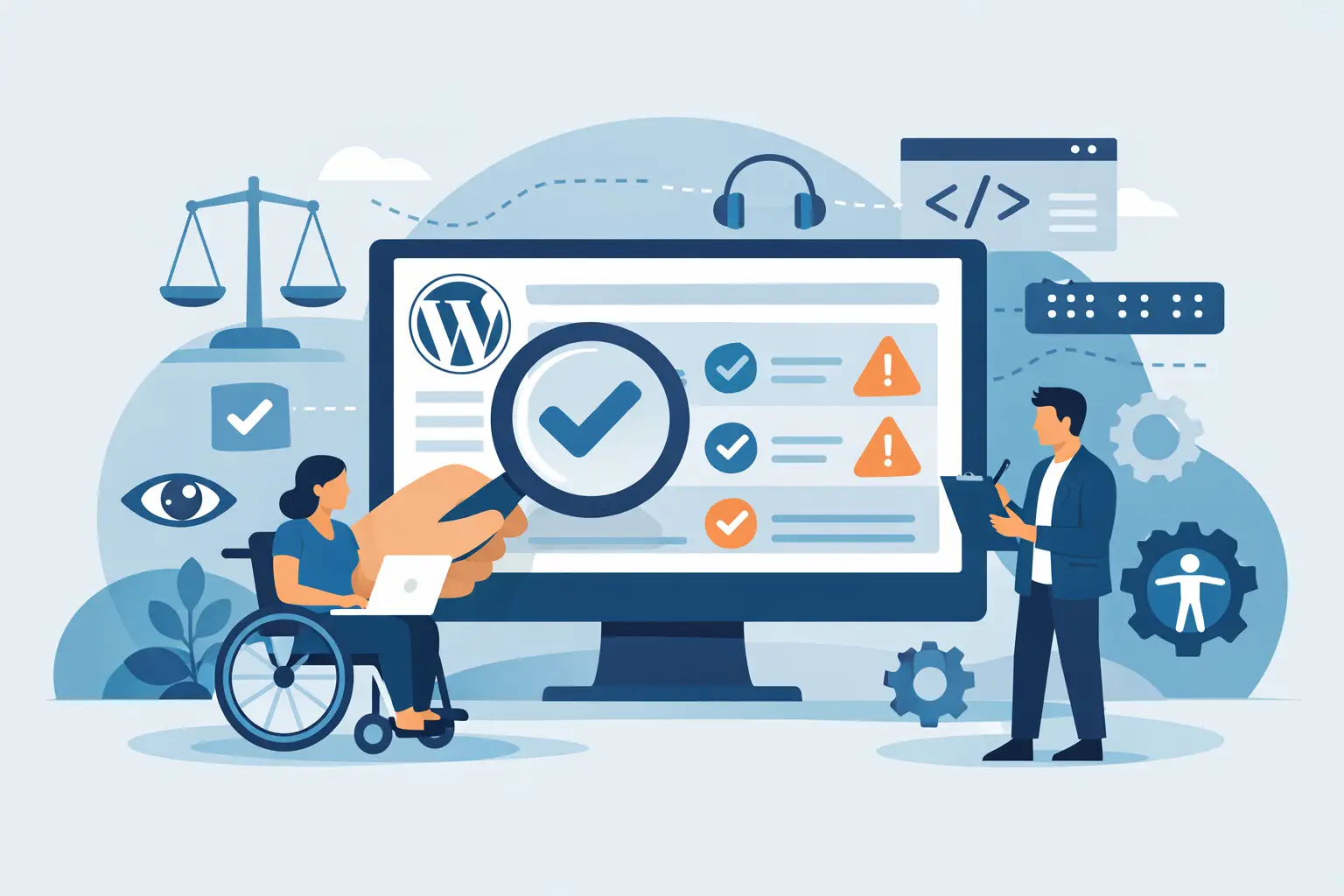
WCAG Auditing for WordPress Sites That Need Control
A public-facing WordPress site can add new accessibility risk every time an editor publishes a page, uploads a PDF, changes a menu, or installs a plugin update. WCAG auditing turns that risk into a controlled process: identify barriers, verify their impact, assign remediation, and keep inaccessible content from returning to production.
For organizations subject to ADA expectations, Section 508 requirements, or institutional accessibility policies, an audit is not a one-time checkbox. It is evidence of an operating practice. The useful question is not whether a website has passed one scan. It is whether the team can consistently find, fix, document, and prevent accessibility failures across the full WordPress environment.
What WCAG Auditing Actually Measures
WCAG, the Web Content Accessibility Guidelines, defines testable success criteria for web content. Most organizations use WCAG 2.1 Level AA as a baseline, while WCAG 2.2 Level AA adds newer criteria that affect focus appearance, dragging alternatives, target size, and accessible authentication. Section 508 requirements also rely substantially on WCAG standards for covered federal technology.
A proper audit evaluates whether real users can perceive, operate, understand, and reliably use website content. That includes keyboard-only users, people using screen readers, visitors with low vision, users who need sufficient color contrast, and people who may have cognitive or motor limitations.
Automated testing is central to this work because it can inspect large volumes of code and content quickly. It can identify missing image alternative text, empty links, duplicate IDs, unlabeled form controls, skipped heading structures, contrast problems, and many other repeatable issues. However, automation cannot determine every requirement. A tool can detect that a form field has a label, for example, but a human must still determine whether the label is meaningful and whether the form workflow is understandable.
That distinction matters when teams make compliance claims. Automated WCAG auditing provides broad, repeatable coverage and an efficient remediation queue. Manual review provides judgment for context-dependent criteria. High-risk sites need both.
The Scope of a WordPress WCAG Audit
A narrow audit of a few landing pages can create false confidence. WordPress websites distribute content and functionality across far more than standard pages and posts. A complete scope should account for the theme, templates, custom post types, navigation menus, sidebars, widgets, forms, search results, archives, popups, embedded media, and logged-in user flows where applicable.
Documents require particular attention. PDFs and other downloadable files may be essential to a public service, school program, benefit application, or purchasing process. A scan should identify linked documents, but document accessibility often needs separate review for tagging, reading order, headings, tables, form fields, and alternative text.
The same applies to third-party components. A payment form, appointment scheduler, map, chat feature, video player, or cookie banner can create a significant barrier even when the rest of the WordPress site is well maintained. The site owner remains responsible for the visitor experience, though the remediation path may involve a vendor, configuration change, or replacement tool.
For large sites, define the inventory before testing begins. Include primary templates, high-traffic pages, required transactions, public documents, and representative content from each post type. Then expand scanning across the whole site so issues in older pages, orphaned files, and lower-traffic sections do not remain invisible.
A Practical WCAG Auditing Workflow
The most effective audit process connects technical findings to publishing responsibilities. It should produce work that developers, content editors, compliance managers, and agency teams can each act on.
Establish the standard and audit boundary
Document the target standard before running reports. This might be WCAG 2.1 AA, WCAG 2.2 AA, Section 508, or a combination dictated by a contract or policy. Also state which domains, subdomains, WordPress environments, content types, documents, and user journeys are in scope.
This prevents a common reporting problem: a team resolves findings on the main marketing pages but has not evaluated the resource library, event registration flow, or constituent portal. Clear boundaries make progress measurable and reveal what still needs review.
Scan early and across the whole site
Run automated checks against published content, linked pages, theme files, and WordPress components that generate front-end output. The report should identify the affected URL, the specific issue, the relevant standard, and the source location or editing path whenever possible.
Actionable detail reduces remediation time. A report that says “missing form label” is useful. A report that identifies the page, form control, HTML location, and recommended correction is far more useful to the person responsible for fixing it.
WP ADA Compliance Check is designed for this WordPress-native workflow, including site-wide scans, detailed issue reports, checks aligned with WCAG 2.1, WCAG 2.2, and Section 508, and guidance that helps teams locate the source of a problem rather than merely count it.
Prioritize barriers by user impact and exposure
Do not treat every finding as equally urgent. Start with barriers that prevent visitors from completing a necessary task or accessing essential information. An unlabeled required field in an application form, a keyboard-inaccessible navigation menu, an inaccessible payment control, or an unreadable emergency notice should move ahead of minor structural issues on an archived article.
Prioritization also depends on exposure. High-traffic pages, required public services, legal notices, enrollment paths, employment applications, and customer account areas deserve immediate attention. This is not a reason to ignore lower-priority items. It is a way to reduce real-world harm and legal exposure while remediation is underway.
Remediate at the correct source
A WordPress audit frequently reveals the same error across hundreds of URLs because the cause lives in one template, widget, reusable block, or plugin setting. Fixing individual pages may appear productive, but it can waste time and allow the issue to return.
Correct global defects at the theme or component level whenever possible. Address page-specific errors in the editor. Route plugin defects to the plugin vendor or replace the component if a usable correction is not available. When a temporary workaround is necessary, document it and assign an owner and due date for the permanent fix.
Some errors can be corrected automatically, such as defined categories of missing attributes or markup patterns. Automatic correction can reduce workload, but it should not replace validation. Changes that affect labels, reading order, meaning, or interaction behavior still require review in context.
Where Automated Testing Stops
A scan can catch a large number of objective code issues, but it cannot experience a website as a person does. Manual testing should focus on the areas where judgment is required.
Test primary paths using only a keyboard. Confirm that focus order follows the visual and logical order, focus is visible, menus and dialogs can be operated, and users can escape components without becoming trapped. Test forms from start to completion, including error messages, required-field cues, confirmations, and time limits.
Screen reader review should verify that headings communicate page structure, link text makes sense outside its surrounding paragraph, controls announce their purpose and state, and dynamic updates are conveyed appropriately. Review images, charts, video, and documents for equivalent information, not merely the presence of technical markup.
The appropriate depth of manual testing depends on the site. A small informational business site may need targeted review of templates and core conversion paths. A government department, university, healthcare provider, or large ecommerce operation should apply deeper testing to critical services, high-volume content, and major releases.
Make Accessibility Part of Publishing Control
The audit becomes more valuable when it changes daily behavior. If content authors can publish a missing alt attribute, a poorly structured table, or an uncaptioned video without any warning, the remediation backlog will continue growing.
Build accessibility checks into content creation and approval. Editors need clear guidance while they work, not a spreadsheet weeks later. Developers need accessibility acceptance criteria in tickets and release reviews. Agencies need repeatable reporting that distinguishes new issues from known items and shows clients what has been corrected.
Publishing controls can be appropriate for organizations with strict requirements. Blocking publication for specific high-confidence errors is a trade-off: it may slow an editor temporarily, but it prevents known barriers from reaching the public site. For urgent publishing workflows, a documented exception process may be more practical than an absolute block.
Maintain records of scan dates, scope, findings, remediation status, manual testing results, and unresolved exceptions. Documentation does not make an inaccessible site compliant. It does demonstrate governance, supports internal accountability, and gives teams a defensible record of ongoing accessibility work.
Treat Auditing as a Repeatable Compliance Process
WCAG auditing should run after significant theme changes, plugin updates, redesigns, content migrations, and additions to critical functionality. For active sites, scheduled scans are preferable to waiting for a complaint, demand letter, or failed procurement review to expose a longstanding issue.
The goal is not a perfect-looking score that hides unresolved barriers. The goal is operational control: broad automated coverage, meaningful manual verification, clear ownership, and remediation that reaches the source of the problem. When accessibility is handled this way, WordPress teams can publish with greater confidence and give every visitor a more usable path through the site.
Subscribe
Subscribe to receive daily Web Accessibility - Did you know? articles in your inbox.